From Our Grant Recipients
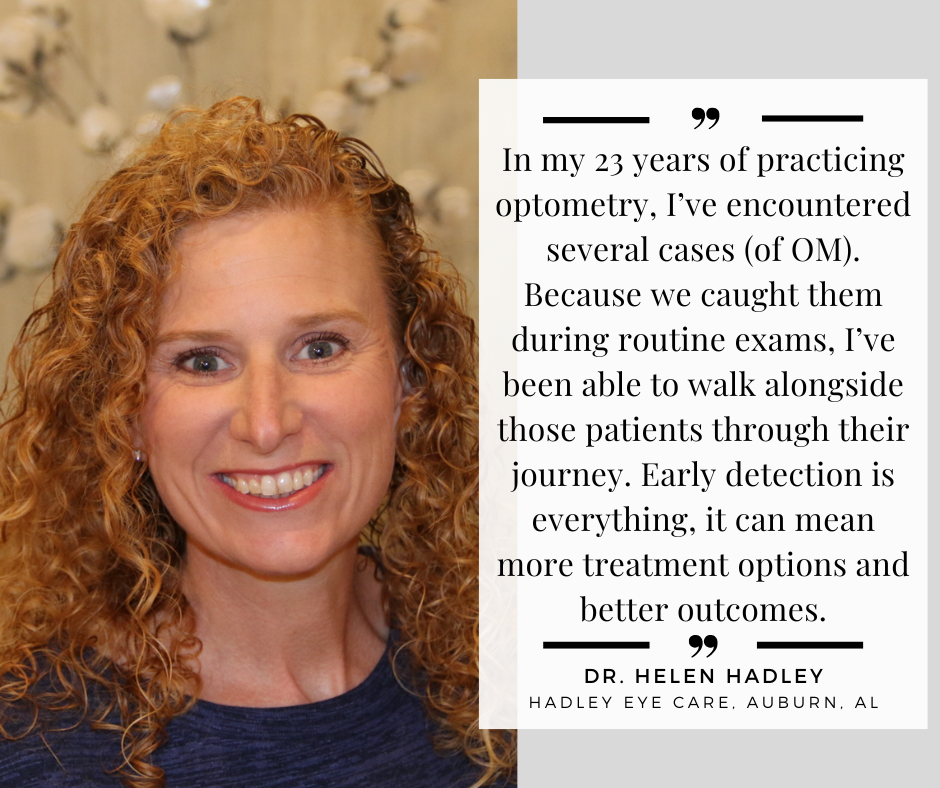
Celebrating World Optometry Day March 23, Dr. Helen Hadley
Did you know that most ocular melanoma is discovered during a routine eye exam? World Optometry Day is an important reminder of the critical role regular eye exams play in protecting not only our vision, but our overall health.
We checked in with Dr. Helen Hadley of Hadley Eye Care in Auburn, AL for insight into why these exams matter so much.
“It’s a common myth that ‘seeing 20/20’ means your eyes are healthy,” says Dr. Hadley. “Think of an eye exam like an oil change for your car—you do it to prevent the breakdown. Most people should be seen once a year. We’re looking for the tiny things you can’t feel yet, so we can keep your vision clear for years to come.”
During a comprehensive exam, optometrists can view blood vessels and nerves without surgery, making the eye a powerful window into overall health. These exams can detect early signs of conditions like glaucoma, cataracts, macular degeneration, diabetes, high blood pressure, high cholesterol, and even certain cancers.
Today’s technology allows providers to use both dilated eye exams and retinal photography. Retinal images provide a detailed 2D snapshot to track changes over time, while dilation allows doctors to see the full retina in 3D. This is why dilation remains the gold standard for identifying issues in the far edges of the eye.
When it comes to ocular melanoma, early detection is critical.
“Ocular melanoma often has no early symptoms,” Dr. Hadley explains. “In the early stages, your eyes usually don’t hurt or give you a warning that something is wrong; it can be incredibly silent.
“In my 23 years of practicing optometry, I’ve encountered several cases. Because we caught them during routine exams, I’ve been able to walk alongside those patients through their journey. Early detection is everything, it can mean more treatment options and better outcomes. If we see something suspicious, we don’t guess, we act. We get patients to the right specialists immediately.”
While routine care is essential, there are times when you shouldn’t wait. Sudden blurry or distorted vision, flashes of light, new floaters, eye pain, or loss of peripheral vision should always be evaluated right away.
On this World Optometry Day, the message is simple: don’t wait for symptoms to prioritize your eye health. A routine exam today can protect your vision—and your life—for years to come.